
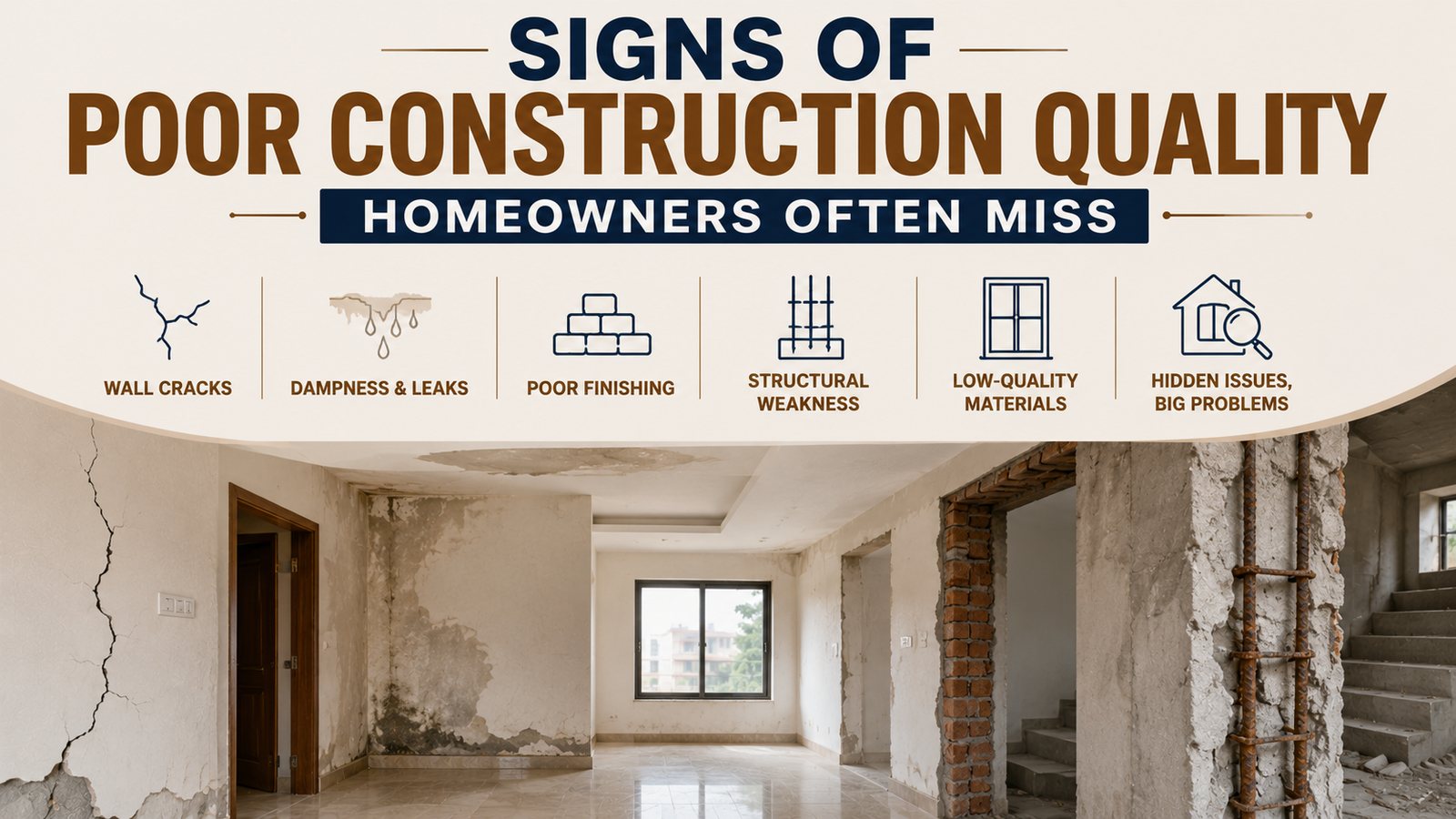
Building a home is one of the biggest investments most families in Bihar will ever make. Yet many homeowners in Patna and Muzaffarpur only discover construction defects years later — when repair costs are far higher than they would have been during the build. Poor workmanship doesn’t always announce itself with an obvious crack in the wall. Often, it hides in small details that seem harmless at first glance.
This guide walks you through the warning signs of low-quality construction that are easy to overlook, so you can catch problems early — whether you’re monitoring an ongoing project or inspecting a home before you buy it.
Why Construction Quality Issues Go Unnoticed
Most homeowners aren’t trained to evaluate structural work, plumbing lines, or electrical fittings. Contractors who cut corners often do so in places that aren’t visible once the finishing work is done — inside walls, under flooring, or above false ceilings. By the time symptoms surface, the cost of fixing them has multiplied.
This is exactly why working with an experienced, transparent team matters. At Vibrance Construction & Interiors, every project goes through stage-wise quality checks — from foundation to final handover — precisely because most defects are cheapest to fix before they’re hidden behind plaster and paint.
1. Hairline Cracks That Keep Coming Back
A few hairline cracks in fresh plaster are normal. What isn’t normal is cracks that reappear repeatedly after repainting, or cracks that run diagonally across a wall or above door and window frames. These often point to poor curing of concrete, weak foundation settlement, or the use of substandard cement mix — a common issue when contractors rush timelines to cut labor costs.
What to check
- Cracks wider than 3mm or growing over time
- Diagonal cracks near corners of doors and windows
- Cracks on both interior and exterior walls in the same spot
2. Uneven or Hollow-Sounding Flooring
Tap different sections of your tiled or marble flooring with a hard object. A hollow, drum-like sound in patches usually means the tiles weren’t bonded properly to the base — a shortcut that leads to tiles cracking or lifting within a year or two, especially in Bihar’s humid, high-moisture seasons.
What to check
- Hollow sound when tapping tiles
- Visible slope or dip when you place a marble/level ball on the floor
- Tiles that shift slightly underfoot
3. Dampness and Water Seepage
Seepage is one of the most common — and most underestimated — quality issues in homes across Muzaffarpur and Patna, largely due to heavy monsoon rainfall. Poor waterproofing at the terrace, bathroom, and external wall joints allows water to seep in slowly, often surfacing as a damp patch or peeling paint months after construction is complete.
What to check
- Damp patches on ceilings, especially below the terrace
- Peeling paint or bubbling on walls near bathrooms
- A musty smell in enclosed rooms during monsoon
4. Doors and Windows That Don’t Sit Right
If doors don’t close flush, windows stick, or you can see daylight through the frame edges, it usually means the openings weren’t measured or built to the correct tolerance. This isn’t just a cosmetic issue — it affects insulation, security, and can indicate that the surrounding wall isn’t perfectly plumb.
What to check
- Gaps between the frame and the wall
- Doors that swing open or shut on their own
- Windows that are difficult to lock
5. Substandard Electrical Wiring
Electrical shortcuts are dangerous precisely because they’re invisible once walls are closed. Low-quality wiring, undersized conduit pipes, or poor-quality switchboards can lead to frequent tripping, overheating switches, or worse — electrical fires.
What to check
- Switchboards or sockets that feel warm to touch
- Frequent tripping of the main circuit breaker
- Flickering lights when multiple appliances run together
6. Weak or Inconsistent Plastering
Run your hand along a plastered wall — it should feel smooth and even. Bumpy patches, visible trowel marks, or plaster that crumbles when scratched with a fingernail all point to a poor sand-cement ratio or rushed application, a quality issue that’s common when labor isn’t properly supervised.
What to check
- Plaster that flakes off or powders easily
- Uneven wall surfaces visible under angled light
- Fresh cracks appearing within months of painting
7. Poor Quality Roofing and Terrace Slope
A terrace or roof without proper slope will collect standing water instead of draining it away, accelerating leaks and structural damage. This is a detail that’s easy for an untrained eye to miss but critical for any home built in a region with heavy seasonal rainfall like Bihar.
What to check
- Puddles of water on the terrace after rain that don’t drain within a few hours
- Cracks near the terrace parapet wall
- Rust stains bleeding through the ceiling (a sign of poor-quality reinforcement steel)
8. Inconsistent Material Quality
Some contractors change the brand or grade of materials midway through a project — using better-quality cement or steel for the sample shown to the client, then switching to a cheaper alternative for the actual build. Always ask for material invoices and brand consistency throughout the project.
What to check
- Mismatched brick or block sizes in the same wall
- Steel bars with visible rust before they’re even used
- No documentation of material brands used at each stage
How to Protect Yourself as a Homeowner
- Ask for stage-wise photos and inspection reports during construction, not just at handover.
- Hire a third-party structural check for major milestones like the foundation and roof slab.
- Request material invoices to confirm brand and grade consistency.
- Work with a company that offers a workmanship guarantee, so accountability doesn’t end at handover.
This is where choosing the right partner makes all the difference. Vibrance Construction & Interiors builds in transparent, documented stages across Patna and Muzaffarpur, with material quality checks and a durability guarantee built into every project — so homeowners aren’t left guessing what’s behind the walls.
Final Thoughts
Most construction defects aren’t caused by bad luck — they’re the result of rushed timelines, unsupervised labor, or corners cut on materials that aren’t visible until it’s too late. As a homeowner in Bihar, the best defense is staying involved during construction: ask questions, request documentation, and don’t hesitate to get a second opinion on anything that looks off.
If you’re planning a new build or want a professional opinion on an ongoing project, the team at Vibrance Construction & Interiors is happy to walk you through what quality construction should actually look like — no jargon, no shortcuts.
FAQs
What is the most common sign of poor construction quality in homes?
Recurring wall cracks and water seepage are the two most common signs, usually caused by poor curing, weak waterproofing, or substandard cement mix.
Can poor construction quality be fixed after the home is built?
Some issues, like seepage or plastering defects, can be repaired, but structural problems such as foundation settlement or weak reinforcement are far more expensive — and sometimes impossible — to fully correct after handover.
How can I check construction quality without technical knowledge?
Simple checks like tapping tiles for hollow sounds, checking door and window fit, looking for damp patches, and asking for material invoices can reveal a lot, even without engineering expertise.
Why is waterproofing especially important for homes in Bihar?
Bihar, including Patna and Muzaffarpur, experiences heavy monsoon rainfall each year. Without proper waterproofing at terraces, bathrooms, and wall joints, seepage and dampness issues surface quickly.
How does Vibrance Construction & Interiors ensure construction quality?
Vibrance Construction & Interiors follows stage-wise quality checks from foundation to final handover, uses documented, brand-consistent materials, and offers a durability guarantee on workmanship for every project in Bihar.